

A high-quality guest post starts with a clear purpose, continues with a well-researched, well-written article tailored to the host site, and ends with clean delivery and post-publication follow-through.
Use this end‑to‑end checklist from ideation to publication:
1. Strategy & Ideation
- Define your goal (authority, backlinks, traffic, relationships, leads).
- Choose sites strategically (relevant audience, real traffic, good content, clean backlink profile).
- Research the blog: audience level, topics, tone, typical formats, and content gaps.
- Validate topic fit: must be relevant, not too generic, and not already covered in similar form on their blog.
- Align with your expertise so you can provide depth and original insight.
2. Pre‑Pitch Preparation
- Read and save the guidelines (word count, format, linking rules, images, style, author bio, byline rules).
- Study top‑performing posts on that blog to mirror structure and depth (headings, visuals, examples).
- Prepare writing samples that show topic relevance and quality.
3. Crafting a Strong Pitch
- Use a clear subject line: e.g. “Guest post idea: [Compelling Title]”.
- Personalise your email: use editor’s name, reference 1–2 specific recent posts.
- Establish authority briefly (1–2 lines: role, niche, notable results or publications).
- Pitch 1–3 specific article ideas with:
- Proposed titles
- 3–5 bullet points outlining sections and key angles/value
- Explain value to their audience (problems solved, gaps filled, outcomes readers get).
- Link to 2–3 best samples (ideally guest posts or high‑quality articles).
- Keep it concise and error‑free.
- Follow up once or twice after a reasonable time if no reply.
4. Planning & Outlining the Post
Once a topic is accepted:
- Confirm requirements: angle, word count, deadline, internal links, anchor text, image specs, bio length.
- Create a detailed outline:
- Hooking introduction (why it matters, who it’s for)
- 4–6 logical sections or steps
- Places for examples, data, and visuals
- Conclusion + CTA tailored to their readers (not hard selling)
- Map SEO elements (primary keyword, 2–3 secondary keywords, search intent).
- Plan internal links to relevant posts on their site and a small number of contextual external references.
5. Writing the Draft
- Match the blog’s tone and style while keeping your authentic voice.
- Prioritise value over self‑promotion:
- Solve specific problems step by step
- Share practical, implementable advice
- Add real examples, case studies, or brief anecdotes
- Use original insight, frameworks, or data where possible
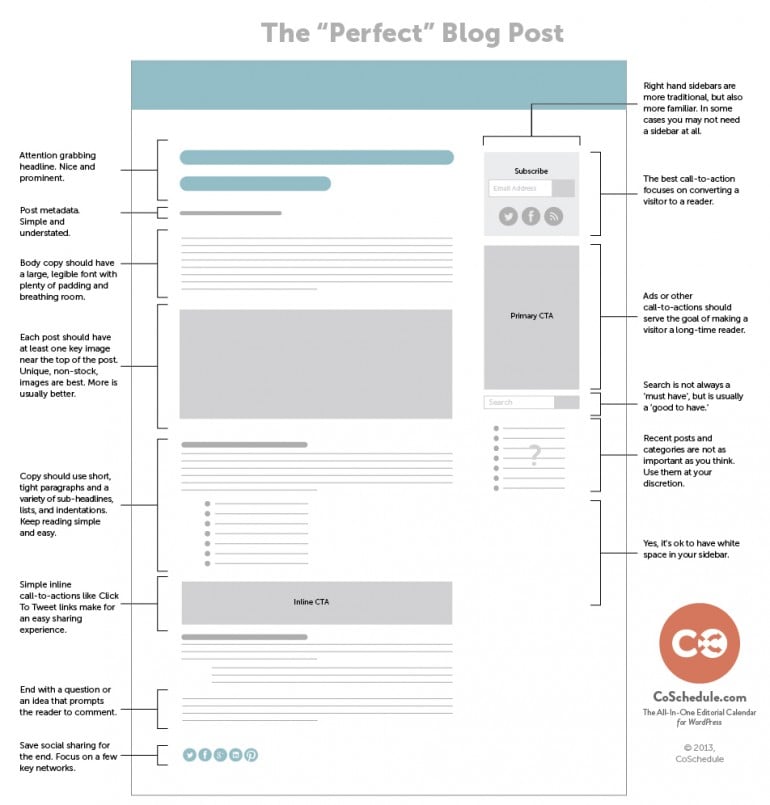
- Structure for readability:
- Clear H2/H3 subheadings
- Short paragraphs (≤4 lines), one idea per sentence
- Bullet/numbered lists where helpful
- Integrate SEO naturally:
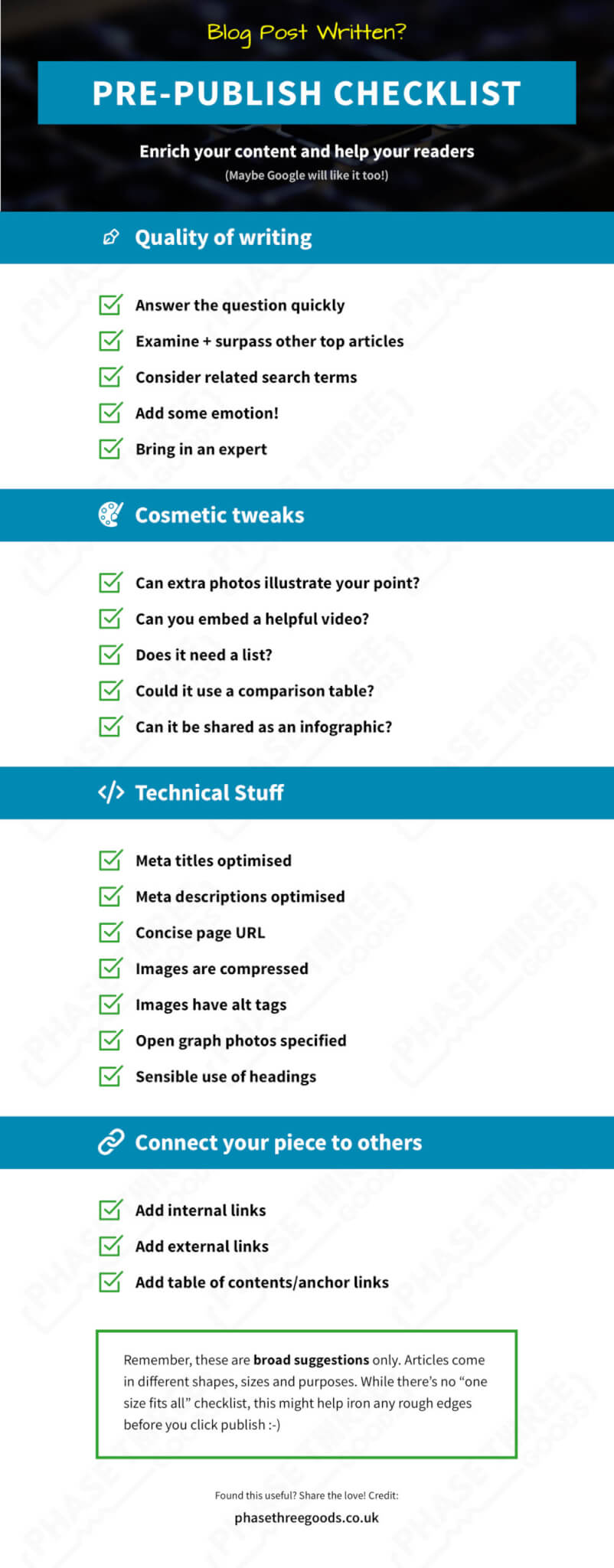
- Main keyword in H1, meta title, meta description
- Supporting keywords in some H2/H3 and body
- No keyword stuffing; write for humans first
- Support claims with evidence: data, studies, quotes, or credible sources.
- Use visuals that add value (diagrams, screenshots, simple charts, not random stock).
- Keep promotion subtle:
- No keyword‑rich, spammy anchors
- 1–2 relevant links to your site max, if allowed, embedded where they genuinely help the reader
6. Optimisation & Quality Control
Before sending to the editor, check:
- Does it fully answer the implied question/intent and feel “definitive” for its scope?
- Flow & coherence: clear transitions, no jumps or repetition.
- Readability:
- Grade ~8–9 or below if possible (Hemingway or similar).
- Skimmable headings and key takeaways.
- On‑page elements:
- Final title (compelling, clear, under ~60–70 characters)
- Meta description (~140–160 characters, benefit‑driven, with main keyword)
- Clear subheadings and hierarchy
- Captions/alt text suggestions for images (if requested)
- Links:
- All internal and external links working and relevant
- No competing or low‑quality external links
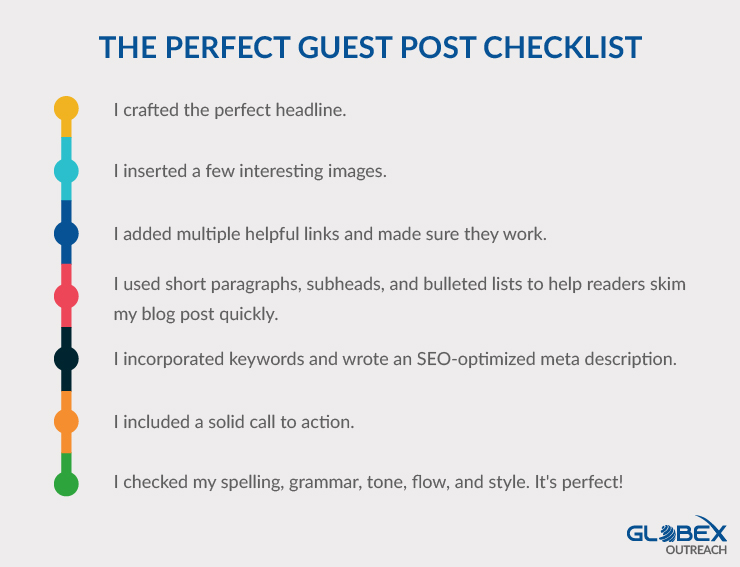
- Compliance with guidelines (word count, format, links, images, file type).
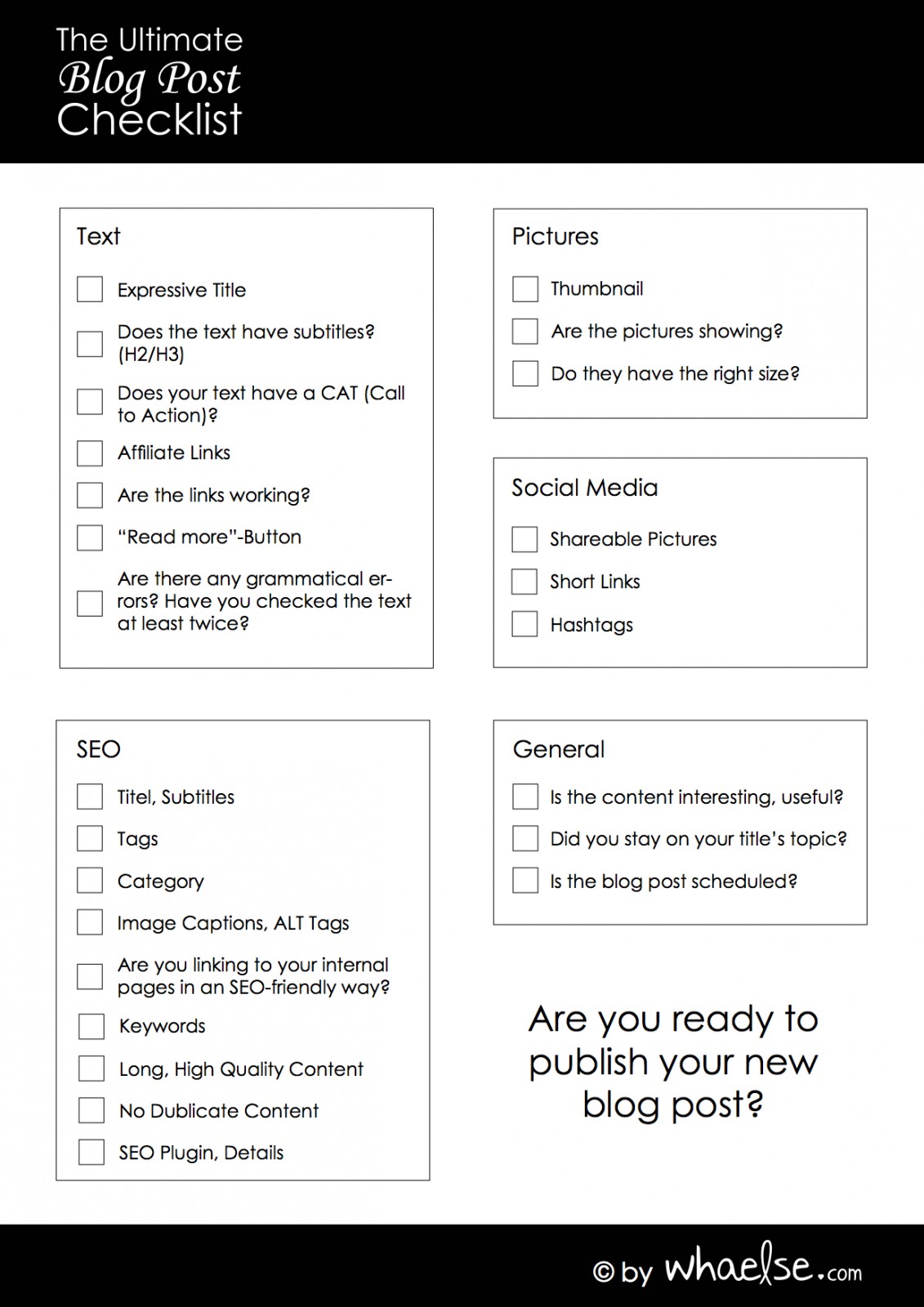
- Grammar and spelling: at least two proofreading passes; use a tool plus manual review.
7. Packaging & Submission
Make it easy for the editor to say “yes”:
- Follow their submission method (Google Doc, Word, CMS, email attachment).
- Use clean formatting (consistent headings, no odd fonts or colours).
- Include a short ReadMe / cover note if useful:
- One‑line summary of the post
- Notes on where images go and their sources
- Any special link or formatting instructions
- Provide assets:
- Author bio (length and links per guidelines)
- Headshot, if requested
- List of sources/references for data and quotes
8. After Submission & Publication
- Respond promptly to editorial feedback and requests for revisions.
- Make revisions thoroughly, not minimally, addressing all comments.
- After publication:
- Check the live post for formatting, link correctness, and bio details.
- Promote it via your email list, social channels, and communities (tagging the publication where appropriate).
- Track performance (referral traffic, rankings, leads, sign‑ups, or mentions).
- Nurture the relationship: thank the editor and be available for future contributions.
If you tell me your niche and typical target sites (e.g. SaaS, marketing, finance), I can turn this into a tailored, one‑page printable checklist with example wording for your pitches and CTAs.














WebSeoSG offers the highest quality website traffic services in Singapore. We provide a variety of traffic services for our clients, including website traffic, desktop traffic, mobile traffic, Google traffic, search traffic, eCommerce traffic, YouTube traffic, and TikTok traffic. Our website boasts a 100% customer satisfaction rate, so you can confidently purchase large amounts of SEO traffic online. For just 40 SGD per month, you can immediately increase website traffic, improve SEO performance, and boost sales!
Having trouble choosing a traffic package? Contact us, and our staff will assist you.
Free consultation