

Creating Themed Keyword Lists for Content Planning and SEO
Themed keyword lists are a strategic approach to organizing keywords around core topics and concepts rather than treating each keyword in isolation. This method aligns with how modern search engines understand content and user intent, making it a fundamental practice in contemporary SEO and content planning.
Understanding Keyword Themes
Keyword themes are collections of individual keywords and phrases grouped together based on their contextual relationship to a core topic. Rather than simply gathering synonyms or close matches, keyword themes represent words that share a wider semantic connection. For example, a "Digital Marketing" theme might encompass keywords like "content marketing," "SEO," and "social media marketing"—each related to the broader concept despite their individual differences.
The key distinction is that keyword themes go beyond simple keyword insertion by considering semantic search and user intent. This approach allows you to create content that resonates with how people actually search and what they're genuinely looking for.
Benefits of Themed Keyword Lists
Using themed keyword lists offers several advantages for your SEO and content strategy:
Natural-Sounding Content: Rather than forcing a single keyword repeatedly throughout your page, themed keywords allow you to incorporate similar words and phrases that readers naturally use, resulting in more enjoyable and authentic content.
Increased Ranking Opportunities: By targeting multiple related keywords on a single page, you expand your ranking potential significantly. Including closely related and long-tail keywords enriches your overall content—something search engines favour.
Better Search Intent Alignment: Keyword themes are centered around concepts with particular search intents, helping you create content that aligns with what both users and search engines are seeking.
Expanded Traffic Potential: Each keyword in your theme carries associated search volume. By targeting multiple keywords rather than just one, you cast a wider net and increase potential traffic to your page.
Building Your Themed Keyword List
Step 1: Identify Broad Keywords
Begin by identifying your top-level keywords—the broadest options with high search volume. These foundational keywords form the basis of your theme. For a fitness-related theme, examples might include "gym," "workout," and "running".
Step 2: Create Your Seed List
With your themes identified, brainstorm the search terms your ideal customers might use to find your products, services, or information. Aim to create a list of 6-12 seed keywords to provide a comprehensive starting point. Put yourself in your target audience's shoes and consider what they would actually search for online.
Step 3: Expand Your Keyword List
Use keyword research tools like Google Keyword Planner, SEMrush, or Ahrefs to generate additional keyword ideas for each seed keyword. These tools help you explore search volume and competition levels. You can also analyse competitor pages that rank well for your primary keyword—use tools like Ahrefs Site Explorer to discover related keywords they're ranking for.
Step 4: Group Keywords by Intent
Organize your expanded keyword list by grouping them according to user intent. There are typically four types of search intent:
- Information: Users seeking tips, guides, or educational content
- Navigation: Users looking for specific websites or pages
- Transactional: Users ready to make a purchase or complete an action
- Commercial Investigation: Users researching products or services before deciding
By segmenting keywords into these groups, you can craft content that matches user intent, resulting in higher conversion rates.
Step 5: Refine and Organize
Narrow down your list by removing duplicates, plurals, grammatically incorrect terms, and spelling errors. Also eliminate branded keywords that don't align with your strategy and keywords with excessively high difficulty ratings that aren't semantically related to your theme. Aim for ten or fewer keywords per theme to keep your strategy streamlined and manageable.
Practical Implementation
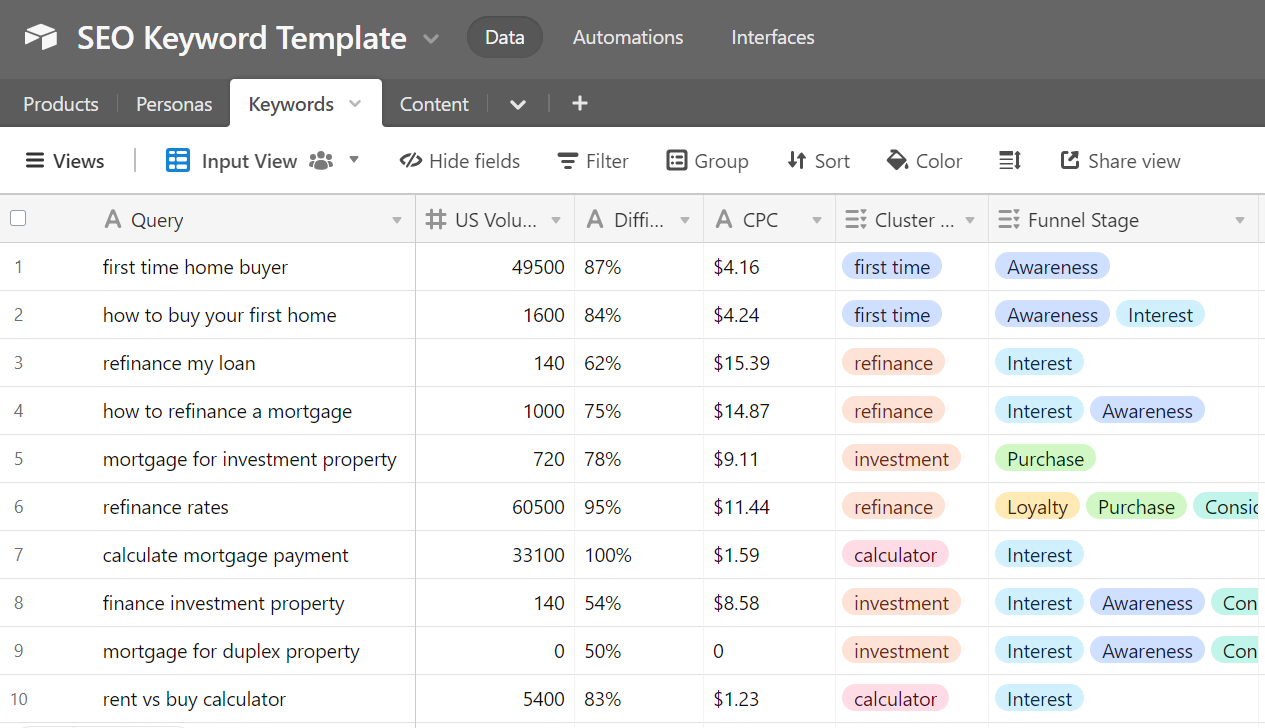
Once your themed keyword list is complete, organize these themes by products, services, and customer needs. For instance, a skincare brand might have themes like "luxury face cream," "sustainable body lotion," and "organic skincare." Record these in a keyword research template to maintain organization and guide your content creation.
When optimizing your pages, integrate selected keywords naturally into your content, including headings, paragraphs, and meta tags. This strategic placement, combined with your themed approach, helps search engines understand your content's relevance while maintaining readability for your audience.
By building themed keyword lists, you create a structured foundation for content planning that balances SEO optimization with genuine user needs and search behaviour.













WebSeoSG offers the highest quality website traffic services in Singapore. We provide a variety of traffic services for our clients, including website traffic, desktop traffic, mobile traffic, Google traffic, search traffic, eCommerce traffic, YouTube traffic, and TikTok traffic. Our website boasts a 100% customer satisfaction rate, so you can confidently purchase large amounts of SEO traffic online. For just 40 SGD per month, you can immediately increase website traffic, improve SEO performance, and boost sales!
Having trouble choosing a traffic package? Contact us, and our staff will assist you.
Free consultation