

For education websites in Singapore, the key safety, PDPA, and privacy issues are data minimisation, consent and notice, security safeguards, retention limits, and third-party/vendor control. If the website handles student or parent information, it should also be designed with children’s data protection in mind, especially where minors’ personal data is collected or processed.
-
Scope of PDPA
- The PDPA governs the collection, use, and disclosure of personal data by organisations, and the PDPC’s education-sector guidance confirms it applies to education institutions unless they are excluded as public agencies.
- Education institutions that are not public agencies, including private education providers, are generally within PDPA scope.
-
Consent, notice, and purpose limitation
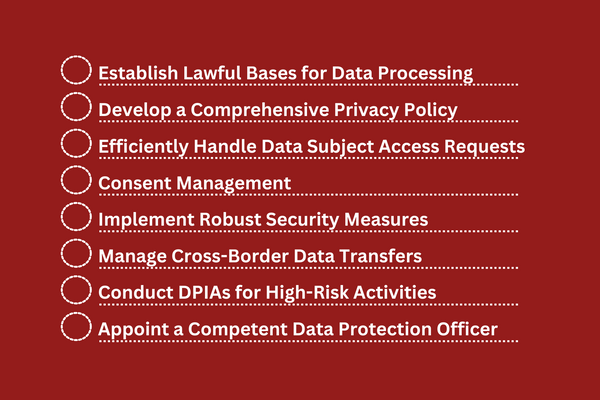
- The organisation should notify individuals of the purposes for which personal data is collected, used, or disclosed, at a level of detail that lets them understand why the data is being collected.
- For minors, the PDPC notes that some education institutions collect, use, and disclose minors’ personal data and may need to obtain consent under the PDPA depending on context.
- Best practice for children’s data is to collect only what is necessary for the educational purpose and avoid extra collection for analytics or marketing unless clearly justified and notified.
-
Security measures
- The PDPA requires reasonable security arrangements to prevent unauthorised access, collection, use, disclosure, copying, modification, disposal, or loss of storage media/devices containing personal data.
- Common controls for education websites include access controls, encryption, and limiting data access by role.
- The MOE states that electronic storage and transmission of personal data are secured with appropriate security technologies.
-
Retention and deletion
- Personal data should not be kept indefinitely; the PDPC guidance and related education-sector materials emphasise retention limitation and deletion when data is no longer needed.
- Some sector guidance suggests publishing retention periods and automating deletion workflows, though the exact retention period should be tied to the business or educational purpose.
-
Third-party tools and hosting
- Education websites often rely on LMS platforms, forms, cloud storage, analytics tools, and messaging tools, so organisations should check how these vendors handle personal data and whether they use sub-processors.
- If a vendor processes or hosts personal data, the organisation remains responsible for PDPA compliance obligations relevant to that processing relationship.
-
Breach and incident response
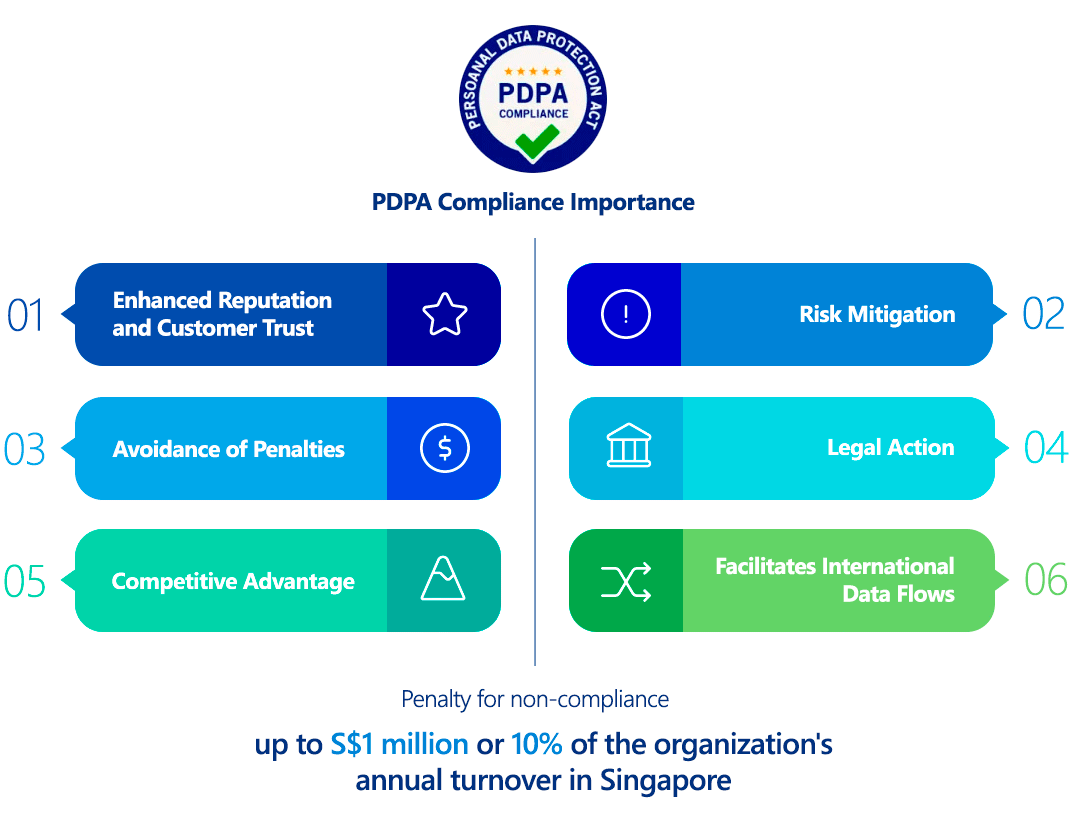
- Education organisations should have a process to detect, escalate, and respond to breaches quickly, because mishandling student data can trigger PDPA enforcement consequences.
- Practical controls include incident reporting procedures, vendor breach-notification clauses, and internal escalation paths for lost devices or misdirected emails.
-
Access, accuracy, and transparency
- School privacy policies commonly state that individuals may access and correct personal data, and that organisations will take reasonable steps to keep data accurate, complete, and updated.
- A clear privacy notice should explain what data is collected, why it is collected, who it is shared with, and how to contact the DPO or responsible person.
-
Children’s privacy design
- For websites used by children, privacy notices should be understandable to parents and, where appropriate, to children themselves.
- Good practice includes privacy by design, parental review controls, and limiting profile creation or tracking features unless they are necessary for the educational service.
If you want, I can turn this into a practical checklist for an education website in Singapore or a sample PDPA/privacy policy outline.













WebSeoSG offers the highest quality website traffic services in Singapore. We provide a variety of traffic services for our clients, including website traffic, desktop traffic, mobile traffic, Google traffic, search traffic, eCommerce traffic, YouTube traffic, and TikTok traffic. Our website boasts a 100% customer satisfaction rate, so you can confidently purchase large amounts of SEO traffic online. For just 40 SGD per month, you can immediately increase website traffic, improve SEO performance, and boost sales!
Having trouble choosing a traffic package? Contact us, and our staff will assist you.
Free consultation