

Attribution Models in Google Analytics 4 (GA4)
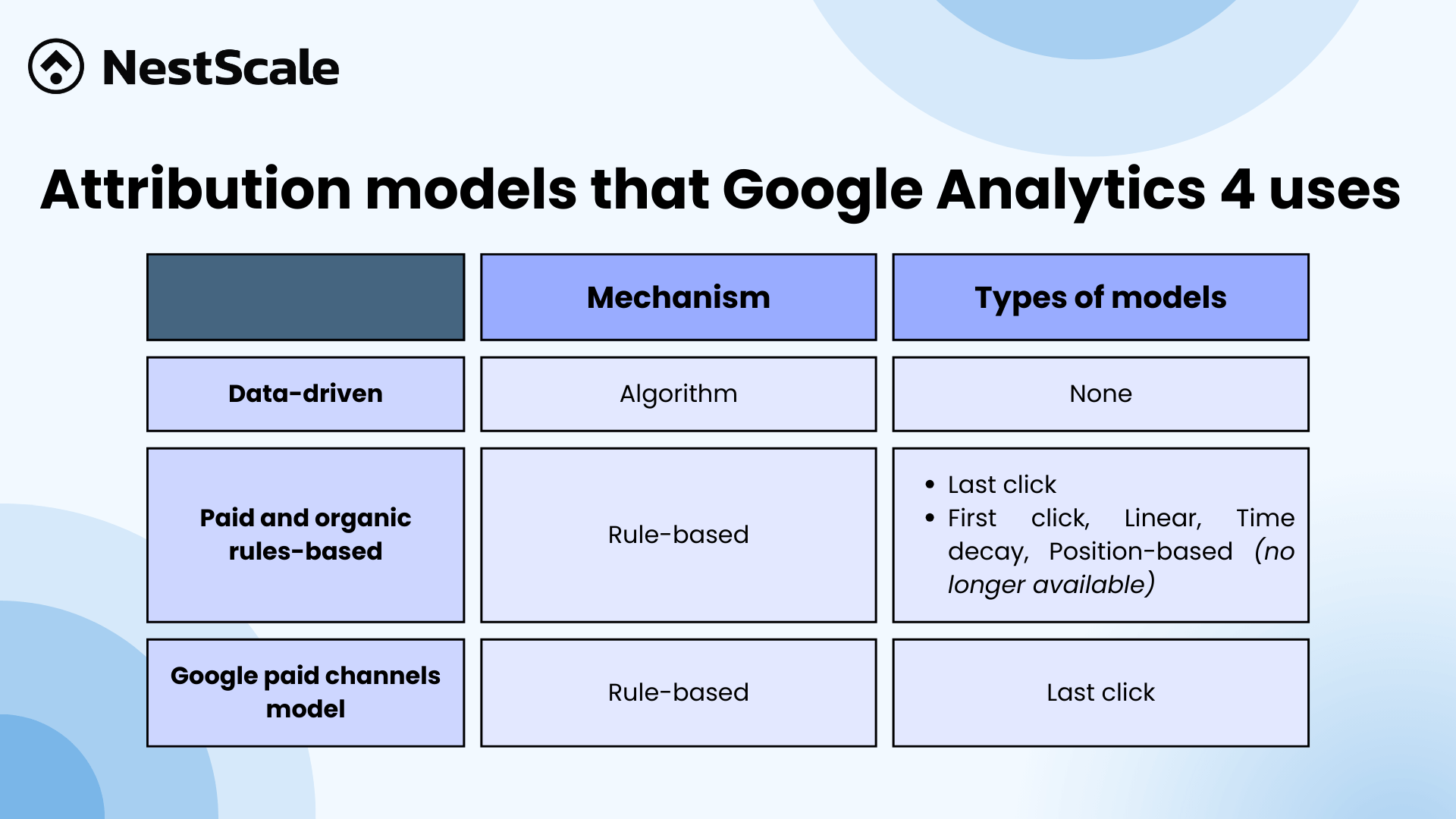
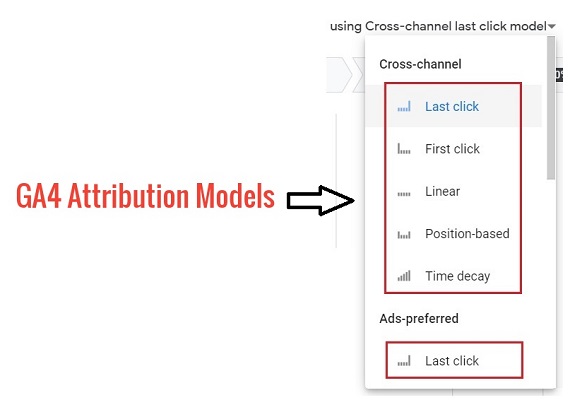
GA4 primarily uses three attribution models: Data-driven (default for event-scoped dimensions), Paid and organic last click, and Google paid channels last click. These models assign credit to marketing touchpoints along a user's path to conversions (now called key events), excluding direct visits unless the entire path is direct. Traditional models like linear, position-based, time decay, and first click have been deprecated and are no longer available in GA4 properties.
Key Attribution Models and How They Work
| Model | Description | Default Usage | Best For Marketers |
|---|---|---|---|
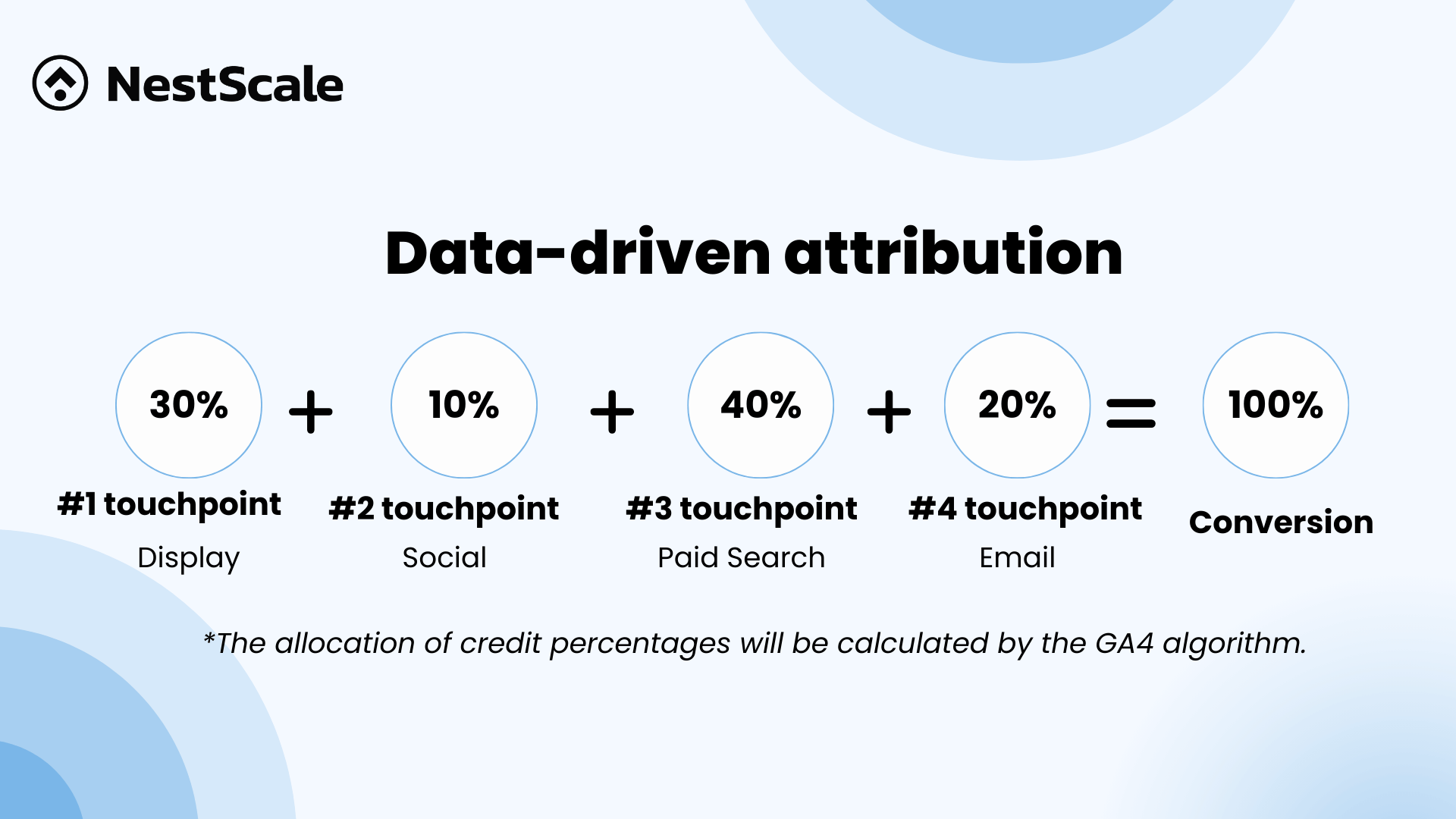
| Data-driven | Uses machine learning and historical conversion data to assign credit based on touchpoint impact, factoring in time, device, ad interactions, and counterfactual analysis (what would happen without a touchpoint). | Event-scoped dimensions; recommended by Google as it adapts automatically. | Complex, multi-channel campaigns where AI identifies high-impact channels without manual rules. |
| Paid and organic last click | Gives 100% credit to the last paid or organic touchpoint before conversion. | User- and session-scoped dimensions. | Simpler analysis focusing on closing channels. |
| Google paid channels last click | Gives 100% credit to the last Google-paid channel (e.g., Search, Display) before conversion. | Available in Attribution reports. | Evaluating Google Ads performance in paid-only contexts. |
You can switch models for event-scoped reports in GA4, applying changes retroactively to historical data. Google recommends data-driven for most scenarios due to its algorithmic precision over rule-based alternatives.
Practical Tips for Marketers
- Compare models in GA4's Attribution reports to reveal channel contributions (e.g., data-driven may credit upper-funnel channels more than last-click).
- Limitations: Models exclude direct traffic; data-driven requires sufficient conversion volume for accurate ML. Test models against your goals before optimizing budgets.
- Deprecated UA models (e.g., linear: equal credit across all touchpoints; position-based: 40% each to first/last, 20% middle) are replaced by data-driven for better multi-device accuracy.
Cohort Analysis in GA4
Cohort analysis groups users by shared characteristics (e.g., acquisition date) to track retention and behavior over time. In GA4, access it via Reports > Retention > Cohort exploration, using the default acquisition date cohort with metrics like retention rate or revenue per user.[Search results lack direct GA4 cohort details; based on standard GA4 functionality as of 2025.]
How Cohort Analysis Works for Marketers
- Setup: Select cohort type (e.g., acquisition date, first session source), date range, and metric (e.g., active users, event count).[Standard GA4 knowledge]
- Key Insights:
- Identify drop-off patterns (e.g., Day 0: 100% retention; Day 7: 30%).
- Compare cohorts (e.g., organic vs. paid traffic) to optimize channels.
- Combine with attribution: Use data-driven model to see which touchpoints drive retained cohorts.
- Advanced Use: Export to BigQuery for custom cohorts; integrate with attribution paths for journey-retention analysis.[GA4 standard]
When to Use for Marketers
- Retention-focused campaigns (e.g., apps, e-commerce) to measure lifetime value beyond one-off conversions.
- Pair with attribution: Data-driven cohorts reveal long-term channel ROI, unlike last-click's short-term bias.[Inferred from ]
For hands-on setup, navigate GA4's Explorations; sufficient data (e.g., 1,000+ users/cohort) ensures reliability.[GA4 standard]















WebSeoSG offers the highest quality website traffic services in Singapore. We provide a variety of traffic services for our clients, including website traffic, desktop traffic, mobile traffic, Google traffic, search traffic, eCommerce traffic, YouTube traffic, and TikTok traffic. Our website boasts a 100% customer satisfaction rate, so you can confidently purchase large amounts of SEO traffic online. For just 40 SGD per month, you can immediately increase website traffic, improve SEO performance, and boost sales!
Having trouble choosing a traffic package? Contact us, and our staff will assist you.
Free consultation