

Consent Management and Cookie Compliance: A Deep Dive
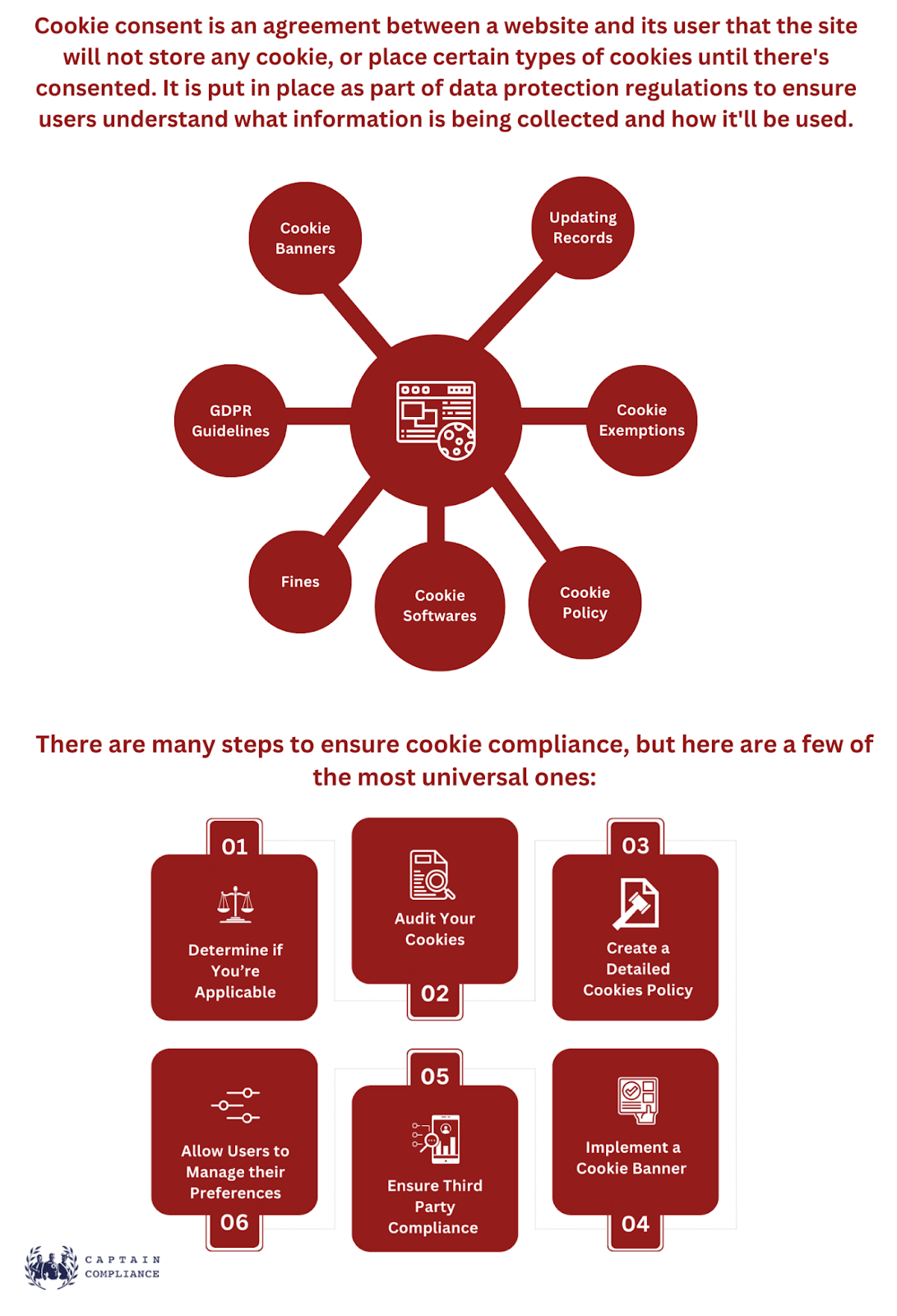
Cookie compliance involves adhering to privacy laws like GDPR and CCPA by ensuring transparency, user control, and valid consent for non-essential cookies and trackers on websites. Consent management, often powered by Consent Management Platforms (CMPs), automates this process by scanning sites, categorizing cookies, blocking trackers until consent, and storing user choices.
Core Concepts
Cookie compliance requires three foundational elements across regulations:
- Transparency: Disclose what cookies are used, their purposes, and effects of blocking them.
- User control: Provide options to accept, reject, or customize categories (e.g., essential, analytics, marketing).
- Respect for choices: Block non-essential cookies until explicit consent and honor withdrawals immediately.
Consent must be freely given, specific, informed, and unambiguous—no pre-ticked boxes, implied consent via browsing, or cookie walls that block site access.
Key Regulations and Requirements
Regulations vary by region but emphasize opt-in for non-essential cookies:
| Regulation | Key Requirements | Consent Type |
|---|---|---|
| GDPR (EU) | Explicit opt-in before non-essential cookies; granular choices; store consent records; easy withdrawal. Fines up to €20M or 4% global revenue. | Opt-in (strictest; blocks until active acceptance). |
| CCPA (California) | Opt-out options; prioritize user control; opt-in for minors' data. | Opt-in for sensitive cases; opt-out generally. |
| ePrivacy Directive (EU Cookie Law) | Inform users and obtain consent for non-essential storage/retrieval. | Varies by jurisdiction (opt-in or opt-out). |
GDPR applies broadest standards into 2026, prohibiting bundling essential and optional cookies.
Consent Types
- Opt-in: Users actively accept (e.g., "Accept" button or checkboxes); required for GDPR non-essentials. No cookies set pre-consent.
- Opt-out: Users decline by action; less strict but must be easy (e.g., one-click reject).
- Information-only: Disclose without action; insufficient for GDPR/CCPA non-essentials.
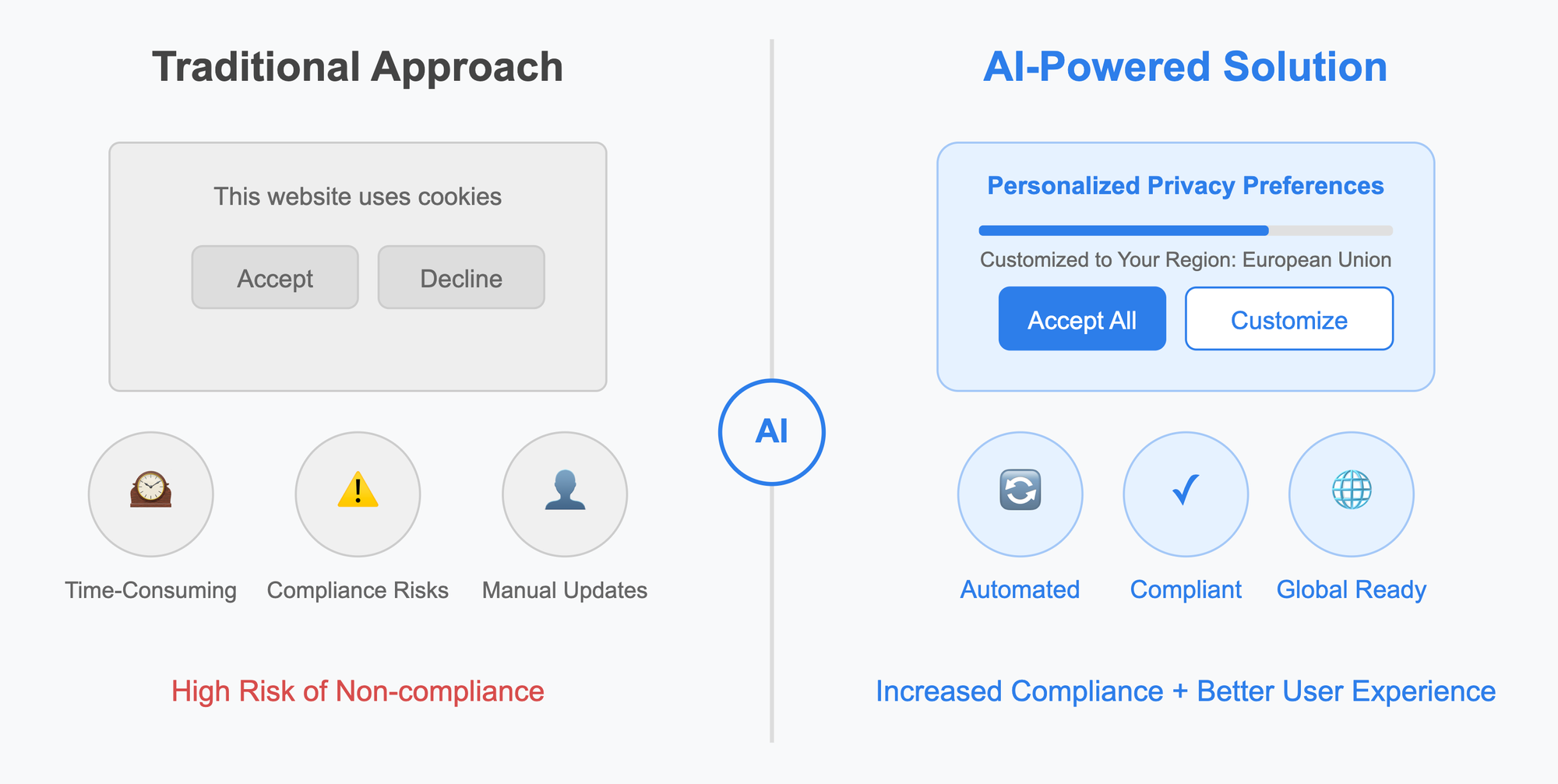
Banners should use simple language, categorize cookies, and link to detailed policies.
Role of Consent Management Platforms (CMPs)
CMPs are software tools that handle end-to-end compliance beyond basic banners. They:
- Scan and audit cookies/trackers automatically, categorizing by purpose (e.g., necessary, preferences, statistics, marketing).
- Block trackers until consent; enable granular choices and withdrawals.
- Store consent records (accepted/rejected) for proof; integrate with Google Consent Mode for analytics in reject scenarios.
- Manage multi-jurisdiction rules, distinguishing cookie consent (user approval) from full CMP scope (all trackers).
Cookie consent is a CMP subset; CMPs ensure validity across laws.
Achieving and Maintaining Compliance: Step-by-Step
- Conduct a cookie audit: Identify all cookies/trackers; generate reports.
- Implement a CMP or banner: Use for scanning, blocking, and granular opt-in.
- Deploy compliant banner: First-layer notice with customize/reject options; no dark patterns.
- Store and document: Securely log choices; enable easy management/withdrawal.
- Regular maintenance: Re-audit periodically for new cookies; update policies.
- Test functionality: Ensure site works without non-essentials; respect rejections.
Small businesses must comply equally—transparency and choice are non-negotiable.
Best Practices and Challenges
- Granular controls: Let users select categories without forcing all-or-nothing.
- No manipulation: Avoid nudges toward acceptance; provide equal reject buttons.
- Mobile/app extension: CMPs cover apps too.
- Challenges: Evolving trackers (e.g., fingerprinting); cross-border traffic requires geo-targeting banners.
Non-compliance risks fines and erodes trust; CMPs minimize this via automation.













WebSeoSG offers the highest quality website traffic services in Singapore. We provide a variety of traffic services for our clients, including website traffic, desktop traffic, mobile traffic, Google traffic, search traffic, eCommerce traffic, YouTube traffic, and TikTok traffic. Our website boasts a 100% customer satisfaction rate, so you can confidently purchase large amounts of SEO traffic online. For just 40 SGD per month, you can immediately increase website traffic, improve SEO performance, and boost sales!
Having trouble choosing a traffic package? Contact us, and our staff will assist you.
Free consultation