

How to Use Social Proof, Testimonials, and Case Studies
Social proof works because people are more likely to trust a product or service when they see evidence that others have used it successfully. In marketing, the most useful forms include reviews, testimonials, and case studies.
1. Social Proof: What it is
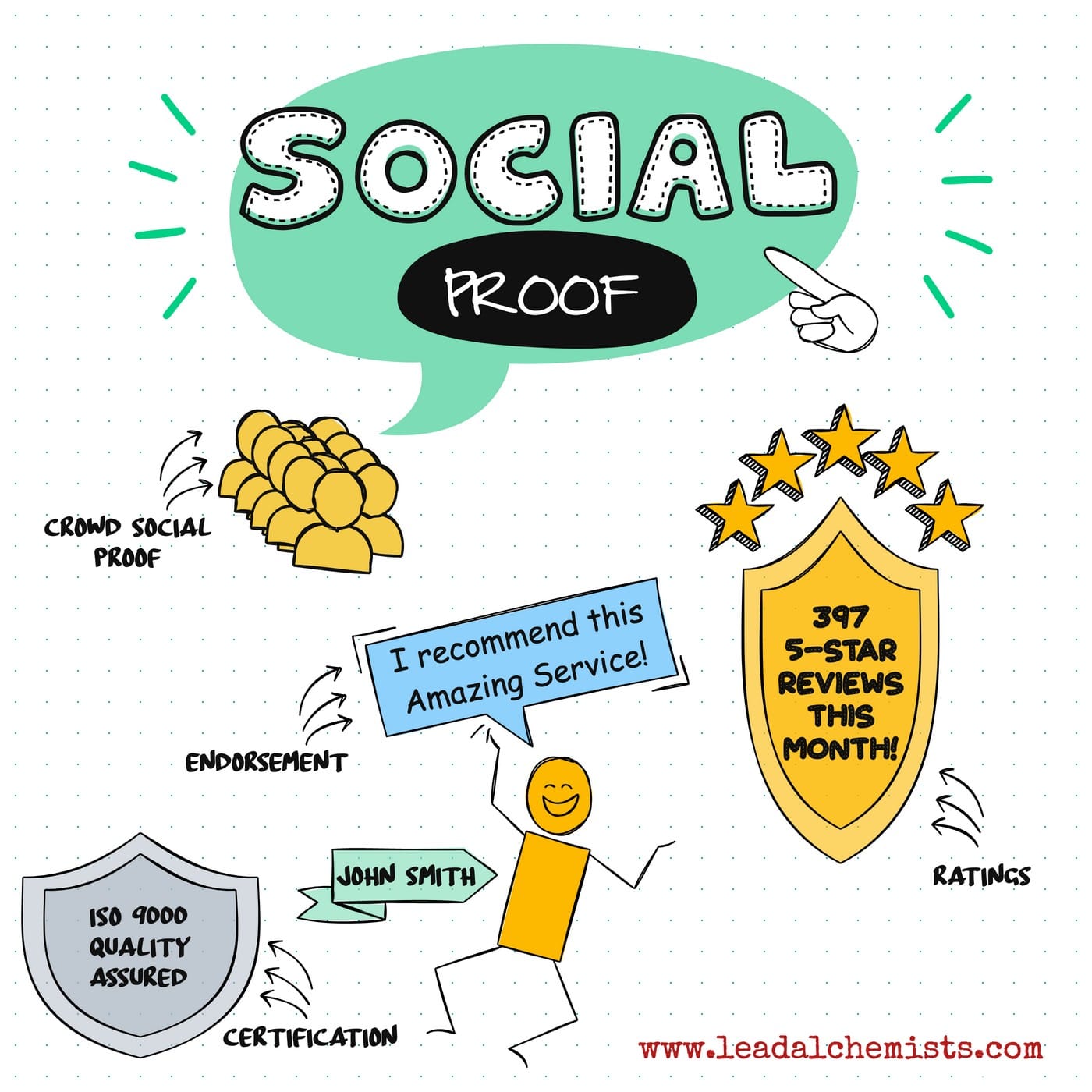
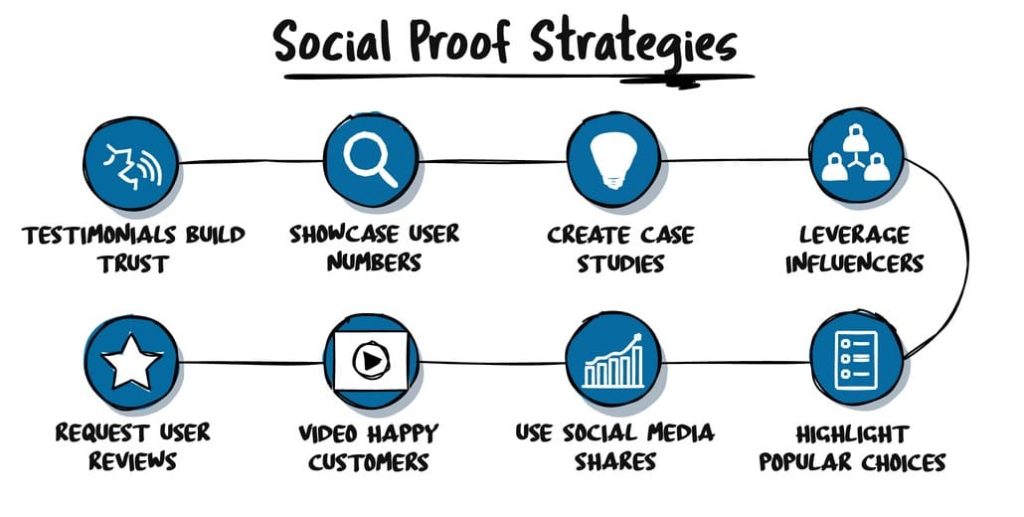
Social proof is any evidence that shows other people have purchased, used, or approved of your product or service. Common types include:
- Customer reviews and star ratings
- Testimonials
- Case studies
- User-generated content
- Mentions from experts or influencers
- Usage stats like “10,000 customers served”
2. How to use testimonials
Testimonials are short quotes from happy customers. They work best when they are:
- Specific: mention a clear benefit or result
- Credible: include the person’s full name, job title, company, and photo if possible
- Relevant: address a common concern or objection
- Placed where decisions happen: product pages, landing pages, sign-up forms, and pricing pages
Good testimonial example
“After switching to this platform, our team cut reporting time by 40% each week.”
Better than generic praise
Avoid vague statements like:
- “Great service!”
- “Highly recommended!”
These do not tell prospects why the product is useful.
3. How to use case studies
Case studies are longer stories that show how a customer solved a problem with your product or service. A strong case study usually includes:
-
The challenge
What problem did the customer face? -
The solution
What did you provide, and how was it implemented? -
The results
Use numbers where possible, such as:- revenue increase
- time saved
- error reduction
- conversion lift
-
A quote from the customer
This adds authenticity and human detail.
Simple case study structure
- Background
- Problem
- Approach
- Outcome
- Customer quote
- Next steps or future plans
4. When to use each type
Use testimonials when:
- you want quick trust signals
- you need short content for ads or landing pages
- your audience is close to buying
Use case studies when:
- the purchase is expensive or complex
- buyers need more reassurance
- you want to show a detailed success story
Use reviews when:
- buyers compare options
- peer opinions matter a lot
- you sell products with many variations
5. Best practices
- Use real names and real data
- Keep the proof visible
- Match the proof to the audience
- B2B buyers often prefer case studies
- consumer buyers may respond more to reviews
- Keep it current
- recent proof feels more credible
- Use a mix of formats
- text, images, and video can all help
6. Where to place social proof
Put social proof in high-decision areas such as:
- homepage
- product pages
- pricing pages
- checkout or sign-up pages
- email campaigns
- sales decks
- proposals
7. Practical example
If you are selling software, you could combine all three:
- Review: star rating on the product page
- Testimonial: short quote near the CTA
- Case study: detailed PDF or blog post showing customer results
This gives prospects both a quick trust signal and a deeper proof point.
8. Key takeaway
Use social proof to build trust, testimonials to add credibility, and case studies to prove results in detail. The more specific and relevant the evidence, the more persuasive it becomes.
If you want, I can also turn this into:
- a short blog post
- a website landing page version
- or a B2B marketing checklist















WebSeoSG offers the highest quality website traffic services in Singapore. We provide a variety of traffic services for our clients, including website traffic, desktop traffic, mobile traffic, Google traffic, search traffic, eCommerce traffic, YouTube traffic, and TikTok traffic. Our website boasts a 100% customer satisfaction rate, so you can confidently purchase large amounts of SEO traffic online. For just 40 SGD per month, you can immediately increase website traffic, improve SEO performance, and boost sales!
Having trouble choosing a traffic package? Contact us, and our staff will assist you.
Free consultation