

CAC and LTV Frameworks for Early-Stage Growth
For early-stage growth, the main idea is that CAC and LTV are useful, but only when your growth process is becoming repeatable enough for the numbers to be reliable.
Key takeaway
- CAC = how much it costs to acquire one new customer
- LTV = how much value that customer brings over their lifetime
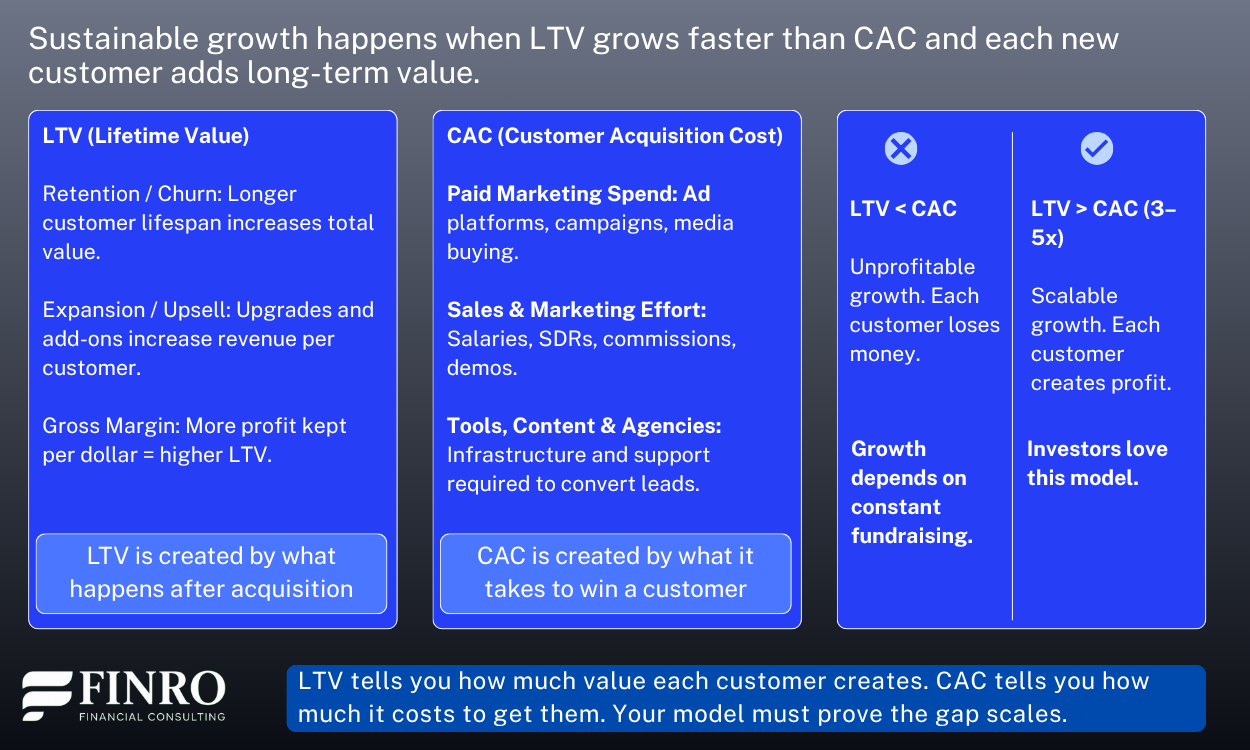
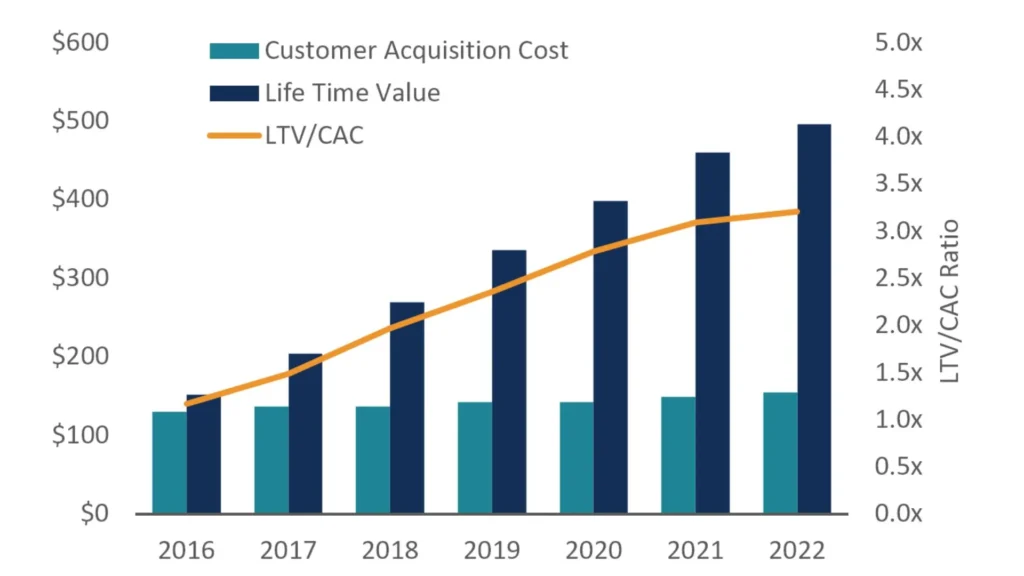
- LTV:CAC = a simple unit economics check on whether acquisition is likely to be sustainable
Why early-stage teams should be careful
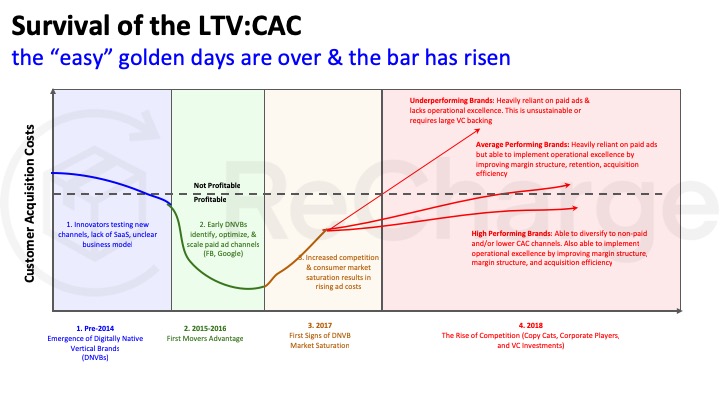
In the very early stage, LTV:CAC can be misleading because:
- customer behaviour may still be changing
- churn data is often too short to be meaningful
- acquisition channels may not yet be repeatable
- small sample sizes can make the ratio look better or worse than it really is
In short, the metric becomes more useful when you have a repeatable and scalable growth process.
Practical framework for early-stage growth
1. Start with CAC
Track all relevant acquisition costs, such as:
- ad spend
- agency fees
- sales and marketing salaries tied to acquisition
- acquisition tools and software
- event or outbound sales costs
Then divide by the number of new customers acquired:
CAC = Total Acquisition Spend / New Customers Acquired
2. Estimate LTV conservatively
A simple way to estimate LTV is to use:
LTV = Average Revenue per Customer × Gross Margin × Customer Lifetime
Or, for subscription businesses:
LTV = ARPA × Gross Margin / Churn Rate
For early-stage companies, it is usually better to underestimate LTV rather than assume long retention too early.
3. Use payback period as the first check
For early-stage companies, payback period is often more practical than LTV:CAC.
Payback Period = CAC / Monthly Gross Profit per Customer
This tells you how quickly the business recovers acquisition costs. If payback is too long, growth can become capital-intensive even if LTV:CAC looks fine on paper.
4. Interpret the ratio by stage
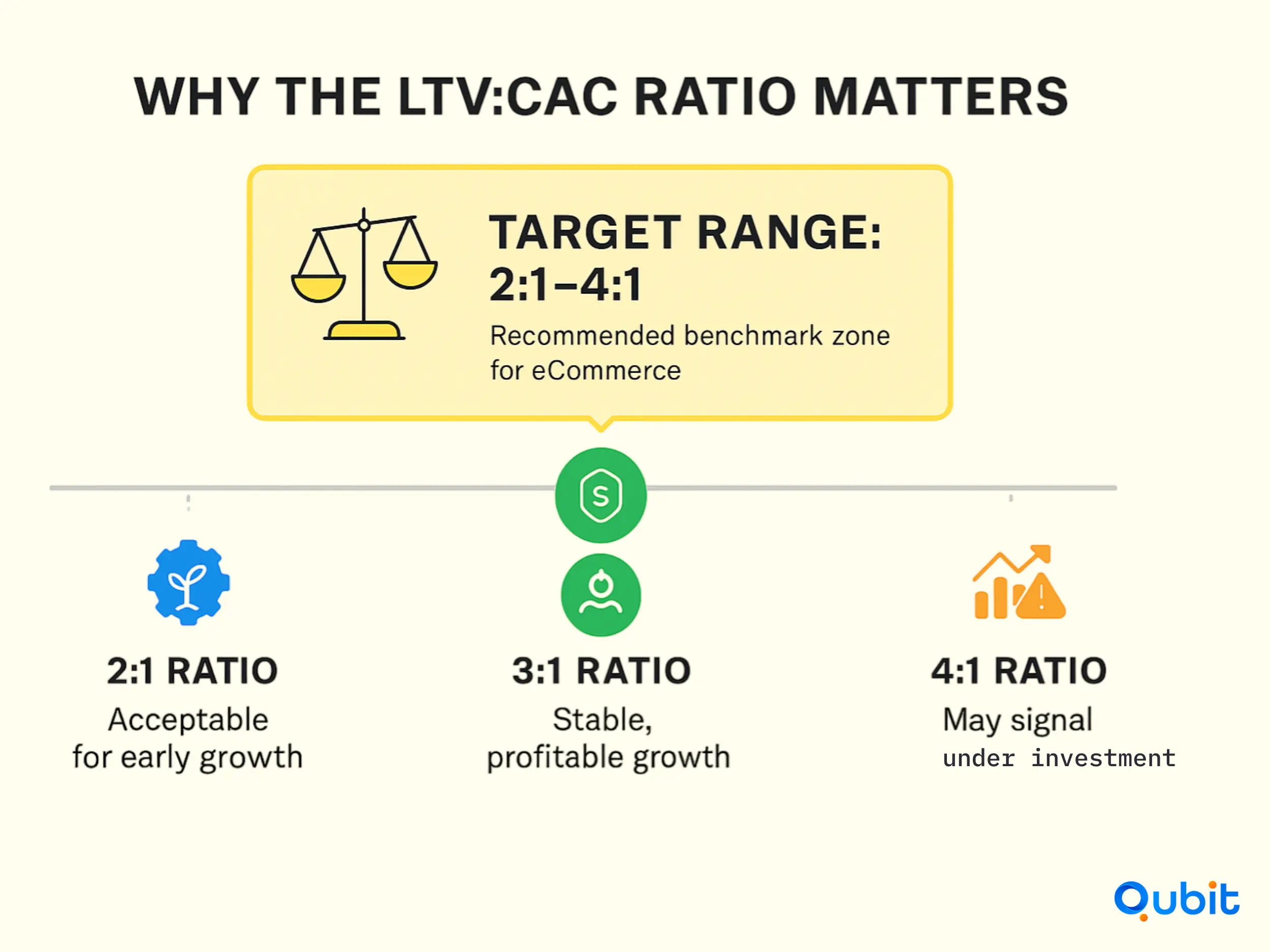
General rule of thumb:
- Below 1:1 — not viable; you are spending more to acquire than the customer is worth
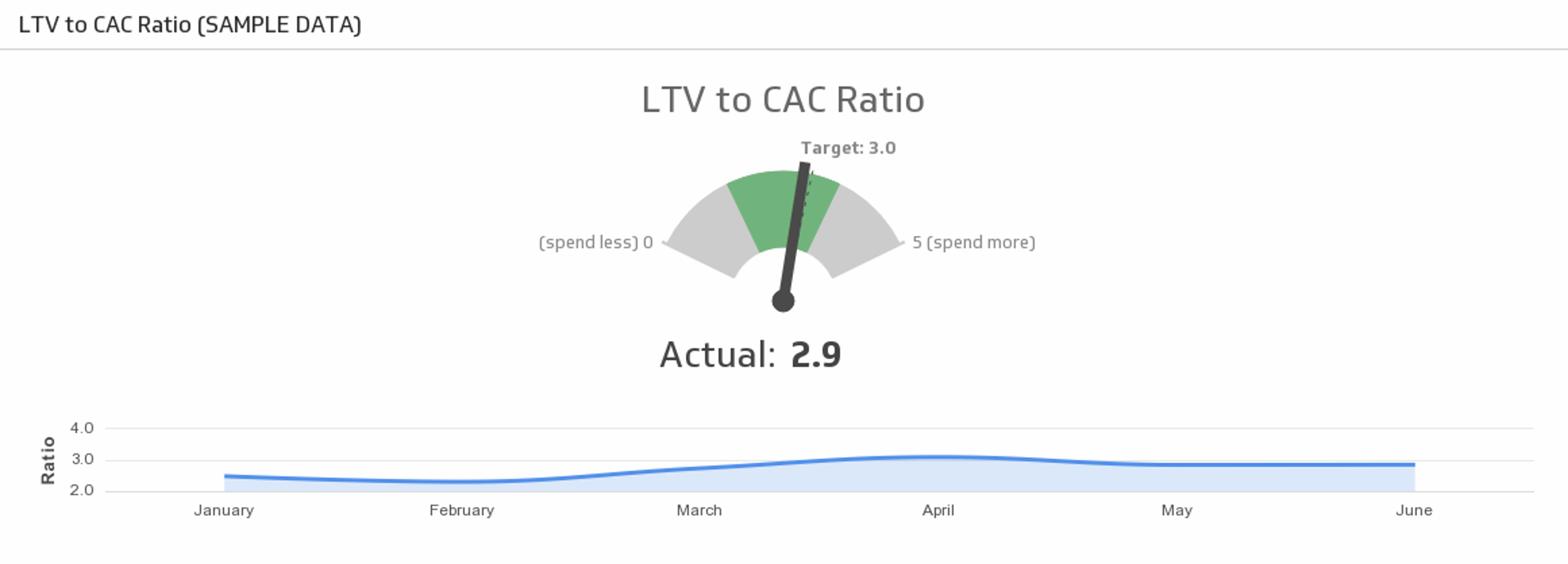
- 1:1 to 3:1 — may be acceptable early on, depending on churn, margin, and payback
- Around 3:1 — commonly viewed as healthy
- Above 5:1 — may indicate you are under-spending on growth, though context matters
A simple early-stage decision lens
Ask these questions:
- Is CAC stable across channels?
- Is churn starting to settle?
- Are customers sticking around long enough to support the assumed LTV?
- Can the channel be scaled without CAC rising sharply?
- Is payback short enough for your cash runway?
If the answer is mostly “not yet”, focus on channel validation, retention, and payback, not just the ratio.
Best framework for early-stage growth
A practical order of focus is:
- Validate one acquisition channel
- Measure CAC accurately
- Track retention and churn by cohort
- Estimate LTV conservatively
- Use payback period first
- Use LTV:CAC once data is repeatable
Bottom line
For early-stage growth, CAC and LTV are best used as directional frameworks, not perfect truth.
If your business is still finding product-market fit, payback period and cohort retention are often more useful than relying too heavily on LTV:CAC.
If you want, I can also give you a startup-friendly CAC/LTV template in spreadsheet form or a step-by-step framework for SaaS, marketplace, or consumer apps.













WebSeoSG offers the highest quality website traffic services in Singapore. We provide a variety of traffic services for our clients, including website traffic, desktop traffic, mobile traffic, Google traffic, search traffic, eCommerce traffic, YouTube traffic, and TikTok traffic. Our website boasts a 100% customer satisfaction rate, so you can confidently purchase large amounts of SEO traffic online. For just 40 SGD per month, you can immediately increase website traffic, improve SEO performance, and boost sales!
Having trouble choosing a traffic package? Contact us, and our staff will assist you.
Free consultation